
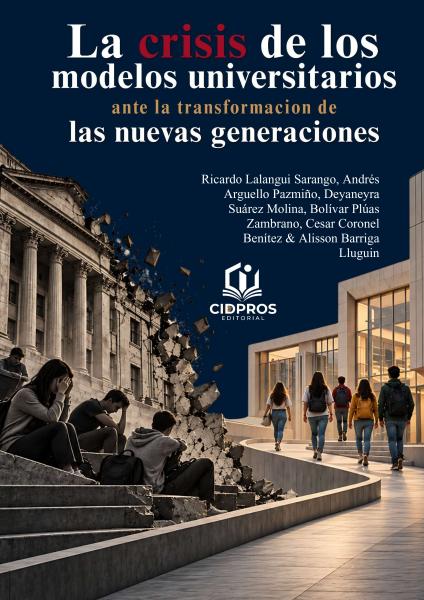
La universidad contemporánea enfrenta una transformación profunda impulsada por cambios generacionales, culturales, tecnológicos y profesionales que cuestionan la permanencia de modelos formativos tradicionales. Esta obra analiza cómo las nuevas generaciones modifican las expectativas sobre la experiencia universitaria, la relación con el conocimiento, la participación, la autonomía, el bienestar, la empleabilidad y la construcción de identidad. A partir de estas transformaciones, se examinan las limitaciones de currículos rígidos, metodologías centradas en la transmisión de contenidos y sistemas convencionales de evaluación que responden con dificultad a contextos sociales y laborales cada vez más dinámicos.
El libro aborda también la expansión de la cultura digital, el aprendizaje autónomo y colaborativo, la inteligencia artificial, la transformación del rol docente y las nuevas formas de producir, compartir y validar conocimiento. Asimismo, analiza la importancia de la pertenencia, la confianza institucional, el proyecto de vida y las expectativas profesionales en la experiencia de las nuevas generaciones.
Finalmente, se plantean principios para avanzar hacia una educación superior más flexible, abierta, inclusiva y centrada en el estudiante, capaz de integrar tecnología, innovación pedagógica, liderazgo institucional y rediseño curricular sin perder rigor académico. La obra propone comprender la crisis de los modelos universitarios no como un proceso de ruptura absoluta, sino como una oportunidad para redefinir el sentido, la función y el futuro de la universidad en sociedades sometidas a transformación permanente.
Alfredo, R., Echeverria, V., Jin, Y., Yan, L., Swiecki, Z., Gašević, D., y Martinez, R. (2024). Human-centred learning analytics and AI in education: A systematic literature review. Computers and Education: Artificial Intelligence, 6. https://doi.org/10.1016/j.caeai.2024.100215
Aljanazrah, A., Yerousis, G., Hamed, G., y Khlaif, Z. (2022). Digital transformation in times of crisis: Challenges, attitudes, opportunities and lessons learned from students’ and faculty members’ perspectives. Frontiers in education, 7, 1047035. https://doi.org/10.3389/feduc.2022.1047035
Amado, M., Guzmán, A., Juárez, F., Ramos, I., y Rodríguez, D. (2024). Keys to managing university reputation from the students’ perspective. Heliyon, 10(21), e39805. https://doi.org/10.1016/j.heliyon.2024.e39805
Amado, M., Guzmán, A., y Cuero, Y. (2023). Student experience scale: Factor analysis in higher education institutions. Frontiers in education, 7, 1057651. https://doi.org/10.3389/feduc.2022.1057651
Amado, M., Guzmán, A., y Juarez, F. (2023). Relationship between perceived value, student experience, and university reputation: Structural equation modeling. Humanities and social sciences communications, 10, 780. https://doi.org/10.1057/s41599-023-02272-y
Aparicio, O., y Aparicio, W. (2024). Innovación educativa con sistemas de aprendizaje adaptativo impulsados por Inteligencia Artificial. Revista Internacional De Pedagogía e Innovación Educativa, 4(2), 343-363. https://doi.org/10.51660/ripie42222
Awidi, I., y Paynter, M. (2024). An evaluation of the impact of digital technology innovations on students’ learning: Participatory research using a student-centred approach. Technology, knowledge and learning, 29, 65-89. https://doi.org/10.1007/s10758-022-09619-5
Banihashem, S., Noroozi, O., van Ginkel, S., Macfadyen, L., y Biemans, H. (2022). A systematic review of the role of learning analytics in enhancing feedback practices in higher education. Educational Research Review, 37. https://doi.org/10.1016/j.edurev.2022.100489
Barua, L., y Lockee, B. (2024). A review of strategies to incorporate flexibility in higher education course designs. Discover education, 3, 127. https://doi.org/10.1007/s44217-024-00213-8
Bayne, S., y Ross, J. (2024). Speculative futures for higher education. International journal of educational technology in higher education, 21, 39. https://doi.org/10.1186/s41239-024-00469-y
Browne, L., y Foss, L. (2023). How does the discourse of published research record the experience of Generation Z as students in the higher education sector? Journal of further and higher education, 47(4), 513-527. https://doi.org/10.1080/0309877X.2022.2143257
Bryant, P. (2023). Student experience and digital storytelling: Integrating the authentic interaction of students work, life, play and learning into the co-design of university teaching practices. Education and information technologies, 28, 14051-14069. https://doi.org/10.1007/s10639-022-11566-8
Bunn, G., Langer, S., y Fellows, N. (2022). Student subjectivity in the marketised university. Frontiers in psychology, 12, 827971. https://doi.org/10.3389/fpsyg.2021.827971
Bygstad, B., Øvrelid, E., Ludvigsen, S., y Dæhlen, M. (2022). From dual digitalization to digital learning space: Exploring the digital transformation of higher education. Computers & education, 182, 104463. https://doi.org/10.1016/j.compedu.2022.104463
Collantes, R., y Jerkovic, M. (2024). Generación Z: Desafíos para la educación superior en el nuevo milenio. Acción y reflexión educativa (49), 9-21. https://doi.org/10.48204/j.are.n49.a4589
Dost, G., y Mazzoli, L. (2023). Understanding higher education students’ sense of belonging: A qualitative meta-ethnographic analysis. Journal of further and higher education, 47(6), 822-849. https://doi.org/10.1080/0309877X.2023.2191176
Eimer, A., y Bohndick, C. (2023). Employability models for higher education: A systematic literature review and analysis. Social sciences & humanities open, 8(1), 100588. https://doi.org/10.1016/j.ssaho.2023.100588
El Galad, A., Betts, D., y Campbell, N. (2024). Flexible learning dimensions in higher education: Aligning students’ and educators’ perspectives for more inclusive practices. Frontiers in education, 9, 1347432. https://doi.org/10.3389/feduc.2024.1347432
Facer, K. (2022). Imagination and the future university: Between critique and desire. Critical times, 5(1), 202-216. https://doi.org/10.1215/26410478-9536559
Fernández, A., Gómez, B., Binjaku, K., y Kajo, E. (2023). Digital transformation initiatives in higher education institutions: A multivocal literature review. Education and information technologies, 28, 12351-12382. https://doi.org/10.1007/s10639-022-11544-0
Gilani, D., y Thomas, L. (2025). Understanding the factors and consequences of student belonging in higher education: A critical literature review. Journal of learning development in higher education (34). https://doi.org/10.47408/jldhe.vi34.1385
Halabieh, H., Hawkins, S., Bernstein, A., Lewkowict, S., Unaldi, B., Fleming, L., y Levitin, D. (2022). The future of higher education: Identifying current educational problems and proposed solutions. Education sciences, 12(12), 888. https://doi.org/10.3390/educsci12120888
Heil, J., y Ifenthaler, D. (2023). Online Assessment in Higher Education: A Systematic Review. Online Learning, 27(1). https://doi.org/10.24059/olj.v27i1.3398
Hunt, R., King, G., y Barnes, C. (2024). Storying student belonging in UK higher education. Journal of geography in higher education, 48(4), 615-632. https://doi.org/10.1080/03098265.2023.2266995
Keane, T., Linden, T., Hernandez-Martinez, P., Molnar, A., y Blicblau, A. (2023). Digital technologies: Students’ expectations and experiences during their transition from high school to university. Education and information technologies, 28(1), 857-877. https://doi.org/10.1007/s10639-022-11184-4
Khosravi, H., Buckingham, S., Chen, G., Conati, C., Tsai, Y.-S., Kay, J., . . . Gašević, D. (2022). Explainable artificial intelligence in education. Computers and Education: Artificial Intelligence, 3, 1-22. https://doi.org/10.1016/j.caeai.2022.100074
Lemon, N., O’Brien, S., Later, N., Britton, S., y Prendergast, J. (2025). Pedagogy of belonging: Cultivating wellbeing literacy in higher education. Higher education, 90, 199-213. https://doi.org/10.1007/s10734-024-01317-8
Lewicka, D. (2022). Building and rebuilding trust in higher education institutions (HEIs). Student's perspective. Journal of organizational change management, 35(6), 887-915. https://doi.org/10.1108/JOCM-02-2022-0037
Li, I., y Jackson, D. (2024). Influence of entry pathway and equity group status on retention and the student experience in higher education. Higher education, 87(5), 1411-1431. https://doi.org/10.1007/s10734-023-01070-4
Mar, L., y Dorantes, J. (2024). Expectativas de trabajo formuladas por estudiantes universitarios. Interconectando saberes(18), 207-220. https://doi.org/10.25009/is.v0i18.2861
Mathrani, A., Sarvesh, T., y Umer, R. (2022). Digital divide framework: Online learning in developing countries during the COVID-19 lockdown. Globalisation, Societies and Education, 20(5), 625-640. https://doi.org/10.1080/14767724.2021.1981253
Mendoza-Villafaina, J., y López-Mosquera, N. (2024). Educational experience, university satisfaction and institutional reputation: Implications for university sustainability. The international journal of management education, 22(3), 101013. https://doi.org/10.1016/j.ijme.2024.101013
Montiel, J. (2024). El sentido de pertenencia universitario: Factores incidentes de un caso de estudio en Celaya, Guanajuato, México. Revista RedCA, 7(20), 100-115. https://doi.org/10.36677/redca.v7i20.22448
Müller, C., Mildenberger, T., y Steingruber, D. (2023). Learning effectiveness of a flexible learning study programme in a blended learning design: Why are some courses more effective than others? International journal of educational technology in higher education, 20, 10. https://doi.org/10.1186/s41239-022-00379-x
Ossa, C., y Willatt, C. (2023). Uso de Inteligencia Artificial Generativa para retroalimentar escritura académica en procesos de Formación Inicial Docente. European journal of education and psychology, 16(2), 5. https://dialnet.unirioja.es/servlet/articulo?codigo=9235913
Otto, S., Bertel, L., Lyngdorf, N., Markman, A., Andersen, T., y Ryberg, T. (2024). Emerging digital practices supporting student-centered learning environments in higher education: A review of literature and lessons learned from the COVID-19 pandemic. Education and information technologies, 29, 1673-1696. https://doi.org/10.1007/s10639-023-11789-3
Reynolds, A. (2022). ‘Where does my £9000 go?’ Student identities in a marketised British higher education sector. SN social sciences, 2, 125. https://doi.org/10.1007/s43545-022-00432-6
Roque, Y., y Quizhpi, L. (2022). Sentido de pertenencia en estudiantes universitarios ecuatorianos en tiempos de pandemia. Puriq, 4, e272. https://doi.org/10.37073/puriq.4.272
Ruiz, R., y del Moral, M. (2022). Aprendizaje activo y competencias socioemocionales en entornos digitales de educación superior. UTE Teaching & Technology (Universitas Tarraconensis), 1(1), 30-49. https://doi.org/10.17345/ute.2021.1.3210
Sallard, S., Cubillas, M., Román, R., y Abril, E. (2023). Expectativas laborales y sentido del trabajo en estudiantes universitarios. Diversitas: Perspectivas en psicología, 19(1), 182-203. https://doi.org/10.15332/22563067.9110
Sánchez, F. (2022). Estrategias de aprendizaje preferidos por los estudiantes universitarios de la generación Z, Amazonas, Perú, 2021. Revista científica UNTRM: Ciencias sociales y humanidades, 5(1), 66-71. https://doi.org/10.25127/rcsh.20225.842
Scandurra, R., Kelly, D., Fusaro, S., Cefalo, R., y Hermannsson, K. (2024). Do employability programmes in higher education improve skills and labour market outcomes? A systematic review of academic literature. Studies in higher education, 49(8), 1381-1396. https://doi.org/10.1080/03075079.2023.2265425
Sillat, L., Tammets, K., y Laanpere, M. (2021). Digital Competence Assessment Methods in Higher Education: A Systematic Literature Review. Education Sciences, 11(8). https://doi.org/10.3390/educsci11080402
Stewart, B., Miklas, E., Szcyrek, S., y Le, T. (2023). Barriers and beliefs: A comparative case study of how university educators understand the datafication of higher education systems. International Journal of Educational Technology in Higher Education, 20(1), 1-20. https://doi.org/10.1186/s41239-023-00402-9
Tan, M., y Maravilla, N. (2024). Shaping integrity: Why generative artificial intelligence does not have to undermine education. Frontiers in Artificial Intelligence, 7. https://doi.org/10.3389/frai.2024.1471224
Temper, M., Tjoa, S., y David, L. (2025). Higher Education Act for AI (HEAT-AI): A framework to regulate the usage of AI in higher education institutions. Frontiers in Education, 10, 1-13. https://doi.org/10.3389/feduc.2025.1505370
Tilley, M. (2025). The things students don’t say: Theorising narrative identity to understand non-traditional students’ experiences in higher education. The australian educational researcher, 52(1), 607-625. https://doi.org/10.1007/s13384-024-00732-1
Tomlinson, A., Simpson, A., y Killingback, C. (2023). Student expectations of teaching and learning when starting university: A systematic review. Journal of further and higher education, 47(8), 1054-1073. https://doi.org/10.1080/0309877X.2023.2212242
Torres, T., Mora, N., Rendón, Á., y Colmont, M. (2024). Influencia del sentido de pertenencia en el rendimiento académico de los estudiantes de educación al inicio de su carrera. Ciencia latina revista científica multidisciplinar, 8(6), 5352-5369. https://doi.org/10.37811/cl_rcm.v8i6.15252
Tsai, Y.-S., Kovanović, V., y Gašević, D. (2021). Connecting the dots: An exploratory study on learning analytics adoption factors, experience, and priorities. The Internet and Higher Education, 50. https://doi.org/10.1016/j.iheduc.2021.100794
UNESCO. (2023). Guía para el uso de IA generativa en educación e investigación. https://www.unesco.org/es/articles/guia-para-el-uso-de-ia-generativa-en-educacion-e-investigacion
Van de Werfhorst, H., Kessenich, E., y Geven, S. (2022). The digital divide in online education: Inequality in digital readiness of students and schools. Computers and Education Open, 3. https://doi.org/10.1016/j.caeo.2022.100100
Viberg, O., Kizilcec, R., Jivet, I., Martínez, A., Oh, A., Mutimukwe, C., . . . Scheffel, M. (2024). Cultural differences in students’ privacy concerns in learning analytics across Germany, South Korea, Spain, Sweden, and the United States. Computers in Human Behavior Reports, 14. https://doi.org/10.1016/j.chbr.2024.100416
Wang, S., Wang, F., Zhu, Z., Wang, J., Tran, T., y Du, Z. (2024). Inteligencia artificial en educación: una revisión sistemática de la literatura. Expert Systems with Applications, 252. https://doi.org/10.1016/j.eswa.2024.124167
Zhang, P., y Tur, G. (2024). A systematic review of e-portfolio use during the pandemic: Inspiration for post-COVID-19 practices. Open Praxis, 16(3). https://doi.org/10.55982/openpraxis.16.3.656

CIDPROS EDITORIAL es una editorial académica comprometida con la difusión ética y responsable del conocimiento científico y con la promoción de publicaciones académicas de calidad.
CC BY 4.0 — Creative Commons Atribución 4.0 Internacional
Esta obra se distribuye bajo los términos de la licencia Creative Commons Atribución 4.0 Internacional (CC BY 4.0), que permite compartir y adaptar el material para cualquier propósito, incluso comercial, siempre que se otorgue el crédito correspondiente a los autores, se proporcione un enlace a la licencia y se indique si se realizaron cambios.